How Fast Does An Airplane Travel
A practical step-by-step guide to how fast does an airplane travel, including preparation, instructions, common issues, tips, and next steps.
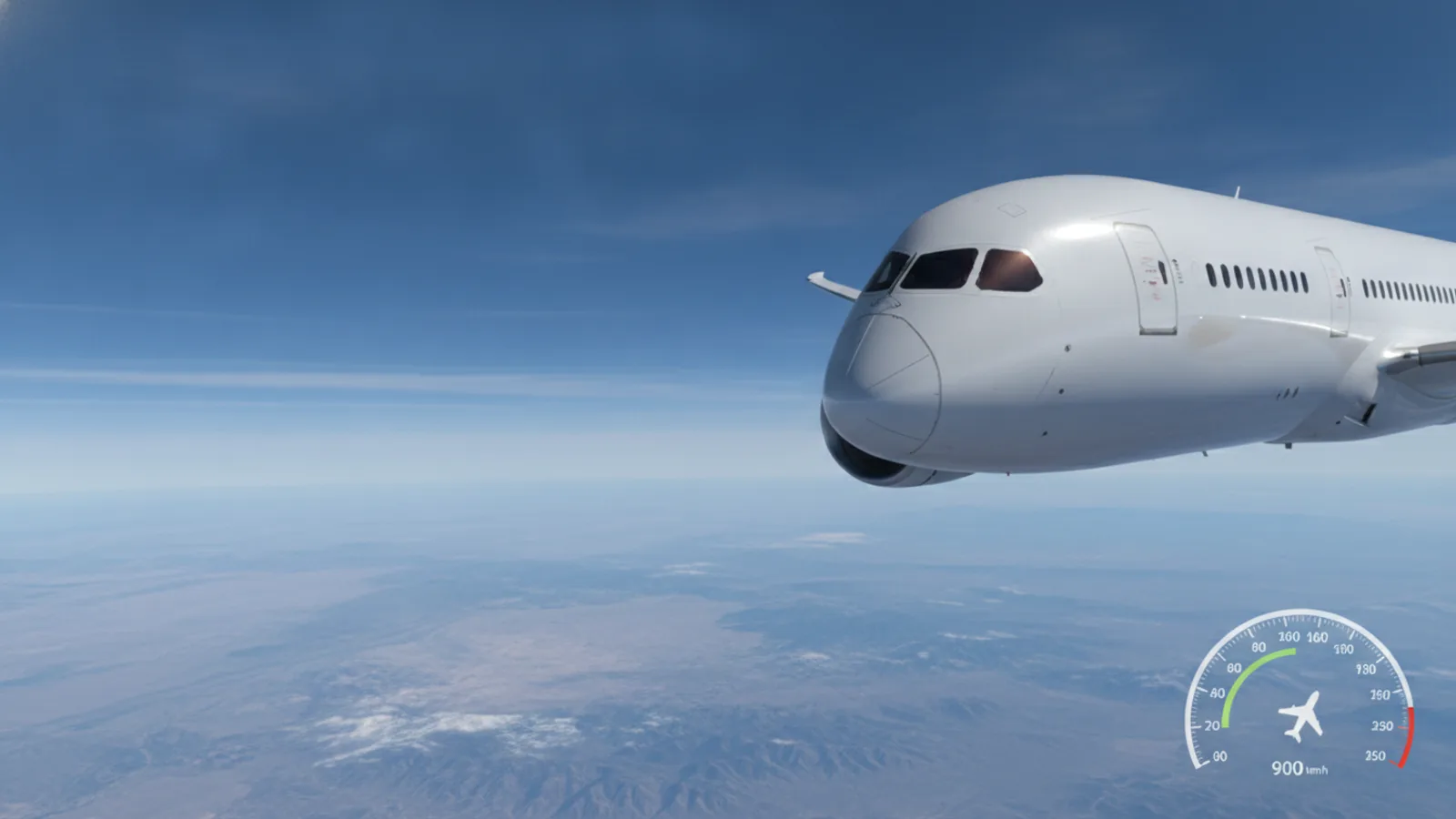
How Fast Does An Airplane Travel
This guide explains how to approach how fast does an airplane travel, including the preparation, practical steps, common mistakes, and final checks that help you finish with confidence.
Before You Start
Step-by-Step Instructions
Quick Reference
Common Problems When You Evaluate How Fast an Airplane Travels
Understanding airplane speed can be tricky due to the various factors at play. Here are some common misunderstandings and how to address them:
-
Confusing Airspeed with Ground Speed: This is perhaps the most frequent issue. People often assume the speed shown on an in-flight display or flight tracker is the aircraft's true airspeed, when it's usually ground speed. This misunderstanding can lead to confusion about flight duration.
Fix: Always clarify which speed is being discussed. Remember that ground speed includes the effect of wind, while airspeed is what the plane "feels" relative to the air. If you're looking at a flight tracking app, it's almost always ground speed.
-
Not Accounting for Wind: Overlooking the impact of headwinds and tailwinds can make flight times seem inconsistent. A plane travelling at a consistent airspeed might arrive early or late simply due to strong winds.
Fix: When considering flight duration or comparing speeds, factor in potential wind conditions. Strong tailwinds can shave significant time off a long-haul flight, while headwinds can add hours.
-
Assuming All Planes Fly at the Same Speed: It's easy to generalise, but a small propeller plane flies vastly differently from a large commercial jet or a military fighter.
Fix: Always consider the type of aircraft. Their design, engine power, and intended purpose dictate their typical operating speeds. Commercial jets are optimized for high-altitude, high-subsonic speed, whereas smaller planes are not.
-
Misinterpreting Mach Numbers: Without understanding that the speed of sound changes with temperature and altitude, "Mach 0.8" might seem like a fixed miles per hour value, which it isn't.
Fix: Remember that Mach 1 is a relative measure. It represents the local speed of sound. A plane flying at Mach 0.8 at 35,000 feet will have a lower actual miles per hour speed than if it were flying at Mach 0.8 at sea level, because the speed of sound itself is lower at higher altitudes.
-
Focusing Solely on Top Speed: While impressive, an aircraft's top speed isn't its typical operating speed. Commercial flights prioritize efficiency, comfort, and safety over maximum velocity.
Fix: Differentiate between an aircraft's maximum design speed and its common cruising speed. Most of the flight is spent at an economical cruise, not pushing the limits.
Advanced Tips for Understanding How Fast an Airplane Travels
For those looking to deepen their understanding of airplane speeds and flight dynamics, these advanced tips can provide further insight:
-
Utilise Flight Tracking Websites and Apps: Services like FlightAware, FlightRadar24, or PlaneFinder allow you to track commercial flights in real-time. These platforms often display an aircraft's current ground speed, altitude, and even its type. Observing multiple flights will quickly illustrate the variations in speed due to wind and aircraft model.
-
Research Aircraft Performance Charts: For a specific aircraft type (e.g., a Boeing 737 or a Cessna 172), you can often find publicly available performance charts or specifications. These documents detail optimal cruising speeds, altitudes, and fuel consumption rates, offering a comprehensive view of how speed is managed for efficiency.
-
Understand the Concept of "Optimum Altitude": Pilots don't just pick an altitude at random. They fly at an "optimum altitude" where the aircraft achieves the best balance of speed, fuel efficiency, and smooth air. This altitude usually increases as the aircraft burns fuel and becomes lighter during the flight. Understanding this helps explain why planes cruise so high.
-
Learn About "Cost Index": Airlines use something called a "Cost Index" in their flight planning. This is a ratio of time-related costs (like crew salaries) to fuel-related costs. A high cost index means the airline wants to get there faster, even if it burns more fuel. A low cost index prioritises fuel saving, even if it means a slightly slower flight. This directly influences the chosen cruising speed for any given flight.
-
Consider Air Traffic Control (ATC) Constraints: While an aircraft might be capable of a certain speed, ATC might impose speed restrictions, especially around busy airports or in certain airspace. This is done to maintain separation between aircraft and ensure the smooth flow of air traffic. So, the plane might travel slower than its maximum potential in these areas.
How Fast Does An Airplane Travel FAQ
What is the typical cruising speed of a commercial passenger jet?
Most commercial passenger jets typically cruise at speeds between 500 to 600 miles per hour (805 to 965 kilometres per hour). This speed can also be expressed as Mach 0.80 to Mach 0.85, meaning 80% to 85% of the speed of sound at their cruising altitude.
Why do airplanes fly so high?
Airplanes fly at high altitudes (typically 30,000 to 40,000 feet) because the air is much thinner there. Thinner air means less drag, which allows the aircraft to travel faster with less fuel, significantly improving fuel efficiency and reducing operational costs. It also keeps them above most weather disturbances.
Does wind affect how fast an airplane travels?
Yes, wind significantly affects an airplane's ground speed. A headwind (wind blowing against the plane) will decrease its ground speed and increase flight time. A tailwind (wind blowing with the plane) will increase its ground speed and decrease flight time. The aircraft's airspeed, however, is measured relative to the air and is largely unaffected by wind itself, but wind affects how fast the air mass is moving over the ground.
What is Mach speed?
Mach speed is a way of measuring speed relative to the speed of sound. Mach 1 is the speed of sound. An aircraft flying at Mach 0.8 is travelling at 80% of the speed of sound for its particular altitude and temperature. The actual speed of sound varies with temperature, so Mach numbers provide a consistent relative measure in aviation.
What's the fastest passenger plane ever made?
The fastest passenger plane ever in commercial service was the Concorde, which could cruise at speeds up to Mach 2.04, or over 1,350 mph (2,170 km/h). It was retired from service in 2003.
How fast do smaller, propeller-driven planes travel?
Smaller, propeller-driven general aviation aircraft typically travel much slower than jets. Their cruising speeds usually range from about 100 to 200 mph (160 to 320 km/h), depending on the specific model and engine power.
Final Checklist for How Fast Does An Airplane Travel
By now, you should have a solid understanding of the various factors that influence how fast an airplane travels. Use this checklist to confirm your knowledge:
- Do you understand the difference between airspeed and ground speed?
- Can you identify the typical cruising speed range for commercial passenger jets?
- Are you aware of how altitude affects an aircraft's speed and efficiency?
- Can you explain how wind conditions (headwind vs. tailwind) impact flight duration?
- Do you grasp the concept of Mach number as a relative speed measurement?
- Can you differentiate typical speeds for various types of aircraft (propeller, commercial jet, military)?
- Are you confident in using resources like flight trackers to observe real-world flight speeds?
- Have you considered the various operational factors, such as air traffic control and airline cost index, that can influence actual flight speeds?
With this knowledge, you're better equipped to interpret flight information and appreciate the complexities of air travel speed.